


If you’re thinking about filing bankruptcy, one of your main questions is likely whether the bankruptcy will get rid of your debt. This answer depends a lot on whether your debt is secured or unsecured.
In this blog, we’ll discuss the difference between secured and unsecured debts, give examples of each, and explain why this matters when filing bankruptcy.
Types of Debt
1. Secured Debt
What is Secured Debt?
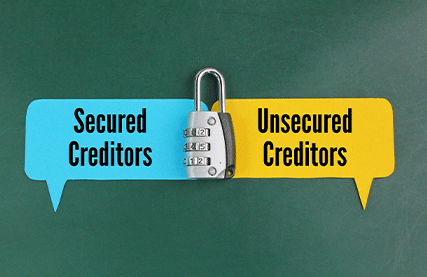
Secured debts are debts where your promise to pay the debt is secured by collateral. Collateral is an asset or property that a borrower pledges to secure the loan. If you don’t keep up with the payments, your creditor can take back the collateral securing the debt.
Examples of Secured Debt:
- Car Loans: A car loan is secured by the vehicle. If you stop paying the car loan, the lender can repossess the car to recover the amount that you owe.
- Mortgage Loans: A mortgage loan is secured by your home. If you stop paying your mortgage, the lender can cause your home to be sold (foreclosure) to repay your debt.
Once the creditor has foreclosed upon your home, or repossessed your car, your property is sold to pay what you owe on the debt. If your collateral is sold for less than what you owe on the debt, the creditor may have the right to sue you for the remaining amount, which is called the deficiency.
2. Unsecured Debt
What is Unsecured Debt?
With unsecured debt, there is no collateral to secure repayment. Because of this, when you default, your creditors cannot claim any specific property to satisfy the debt. Instead, they generally must file a lawsuit against you and win before they can bring collection proceedings which can include wage garnishment.
Examples of Unsecured Debt:
- Credit card debt
- Medical bills
- Personal Loans
- Rent
Why Does the Difference Between Secured and Unsecured Debt Matter in Bankruptcy?
Unsecured and secured debts are treated differently, depending on whether you file a Chapter 7 or Chapter 13 bankruptcy,
Chapter 7 Bankruptcy
Unsecured Debt
In a Chapter 7 bankruptcy, most of your unsecured debt is discharged (eliminated). Unsecured debts that cannot be discharged include child support, most student loans, and recent tax debts.
Secured Debt
Chapter 7 eliminates your personal obligation to pay the secured debt. It does not, however, eliminate the creditor’s lien that allows for the collateral such as your house or car to be sold or repossessed. If you want to keep the secured debt, such as your car or house, you must stay current on the mortgage or car loan. If you would like to give up the collateral by surrendering the car or the house, and it sells for less than what you owe, a Chapter 7 can protect you from being sued by the creditor for the deficiency.
Chapter 13 Bankruptcy
Unsecured Debt
In a Chapter 13 bankruptcy, most unsecured debts become part of the 3-to-5-year repayment plan. The amount you are required to pay towards the unsecured debt depends upon many factors. Most unsecured debts are discharged at the end of a Chapter 13 bankruptcy after only a small portion of the debts have been paid.
Secured Debt
A Chapter 13 allows you 3 to 5 years to become current on your delinquent secured debts through the payment plan. This is why Chapter 13 bankruptcy is especially helpful for those seeking to avoid repossession of their car or foreclosure on their home. As long as you can make the monthly Chapter 13 payments towards your delinquent secured debt under the plan, and stay current on your ongoing payments, your creditors are legally prohibited from taking back the collateral.
Talk to an Attorney at Levitt & Slafkes to Protect Your Assets
We are bankruptcy lawyers who know how to make a difference in your financial situation. We have experience you can rely on, and we care about your results. Contact our New Jersey law firm online by filling out the form or by calling 973-323-2953 to schedule a free initial consultation with an attorney at Levitt & Slafkes, P.C.
We are proudly designated as a debt relief agency by an Act of Congress. We have proudly assisted consumers in filing for Bankruptcy Relief for over 30 years. The information on this website and blogs is for general information purposes only. Nothing should be taken as legal advice for any individual case or situation.